FMS Smart Building POC
LoRaWAN Commissioning
Solo deployment of 25 LoRaWAN sensors across a 20,000 sq ft office and warehouse — leak detection, occupancy, environmental monitoring, and automated garage door control, all feeding a live dashboard. Built to prove the stack before selling it.
Systems Engineer
20,000 sq ft
3 Dashboards
LoRaWAN 915MHz
The Problem
The rest of the world was doing this.
The US wasn't.
Smart building IoT — sensors monitoring temperature, occupancy, leaks, air quality, and energy at the device level — was well established internationally. In the US, the market was wide open, especially for small-to-mid commercial properties and warehouses that couldn't afford enterprise BMS platforms.
The economics are straightforward: a $25 leak sensor under an HVAC unit pays for itself the first time it catches a drip before it becomes $4,000 in water damage. A $30 occupancy sensor in a conference room is cheaper than the energy bill from heating empty spaces. Prevention is always cheaper than remediation — the industry just hadn't connected the hardware to the insight.
Before selling this to building managers, we had to prove it worked — in a real building, with real sensors, real data flowing, and a real dashboard they could look at.
Felix Media Solutions offered their Austin office and warehouse as the test environment. The goal: commission a multi-zone sensor network, evaluate the software stack options, and validate the full data path from device to dashboard.
Use Cases
What we set out to prove.
The use cases were deliberately broad — the POC needed to demonstrate that a single LoRaWAN deployment could cover the scenarios property managers actually care about.
Leak Detection
Milesight WS303 water sensors under the kitchen sink and near HVAC units. Alert fires before a drip becomes a flood.
Automated Garage Doors
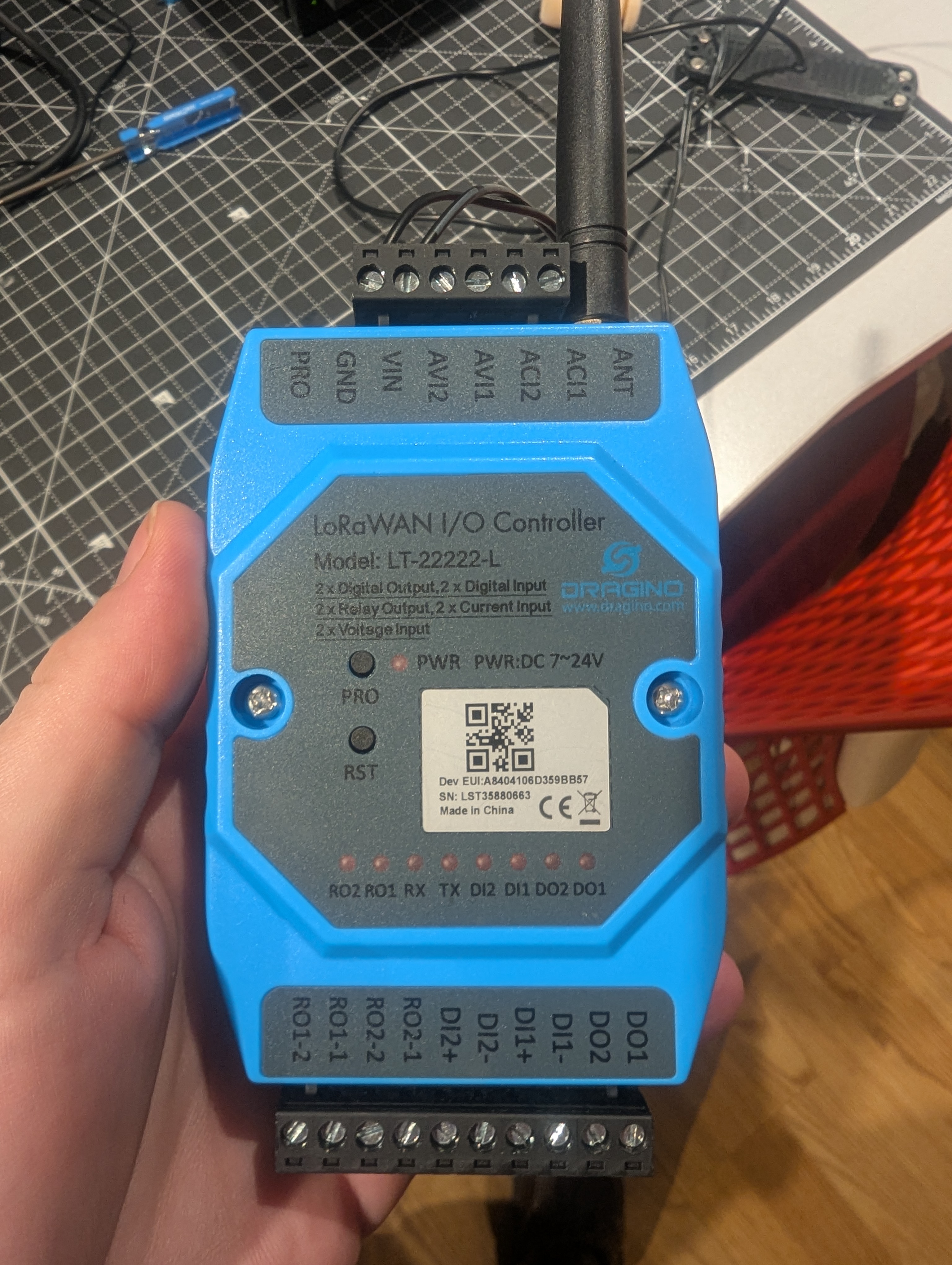
Dragino LT-22222-L relay wired to door switches. Doors auto-close 30 min after 6pm. Geofence trigger from LoRaWAN vehicle trackers also enabled.
Meeting Room Occupancy
PIR and presence sensors in every conference room and office. Live "Occupied / Vacant" status with historical patterns.
Warehouse Temperature
Dragino and SenseCap TH sensors across the warehouse floor to catch hot spots, cold zones, and HVAC inefficiencies.
OSHA Sound Compliance
Three Milesight WS302 sound sensors in the inventory room, loading dock, and warehouse. Alert threshold set to OSHA permissible exposure limit.
Fridge Temperature Monitoring
Dragino LHT65S with external probe sensor tracking refrigerator temperature 24/7. Alerts on anomalies before food spoils or equipment fails.
Energy Monitoring
Dragino CS01-LB current sensor on the main breaker and Netvox R809AB smart plug at circuit level. Baseline energy profiling for the building.
Air Quality
Milesight AM107 monitoring CO₂, TVOC, PM2.5, humidity, and illumination in the kitchen and bathroom. Alerts when CO₂ approaches unsafe levels.
Vehicle Tracking
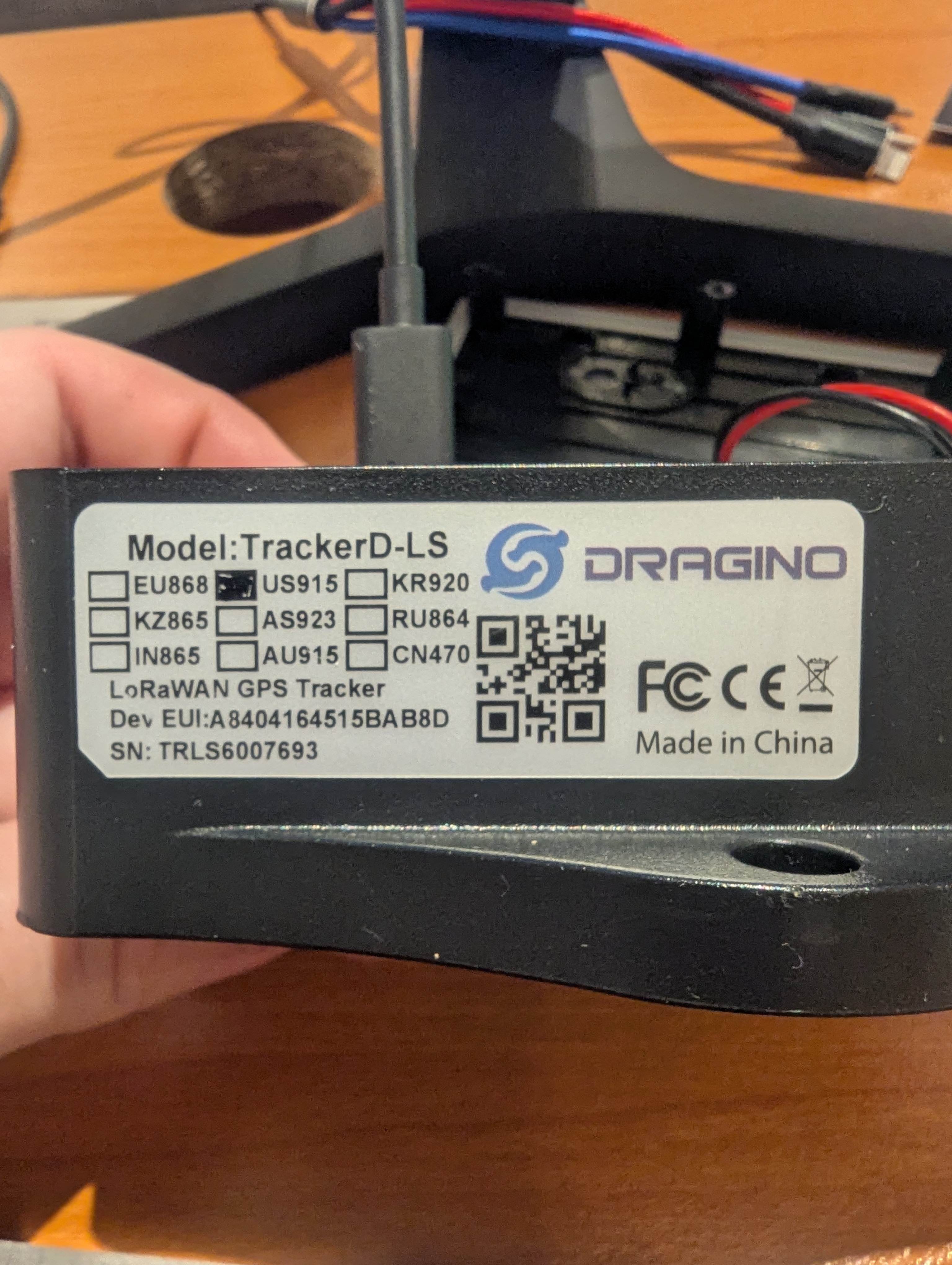
Dragino TrackerD-LS GPS units mounted on company vehicles. Integrated with geofence triggers for automatic gate/door logic.
Architecture
Sensor to screen.
Platform Evaluation
Testing the stack. Picking the winner.
A core goal of this POC was finding the right software stack — not just the right hardware. I tested three LNS platforms and three dashboard platforms before converging on the combination we'd recommend to customers.
Commissioning
The unglamorous work that makes the system real.
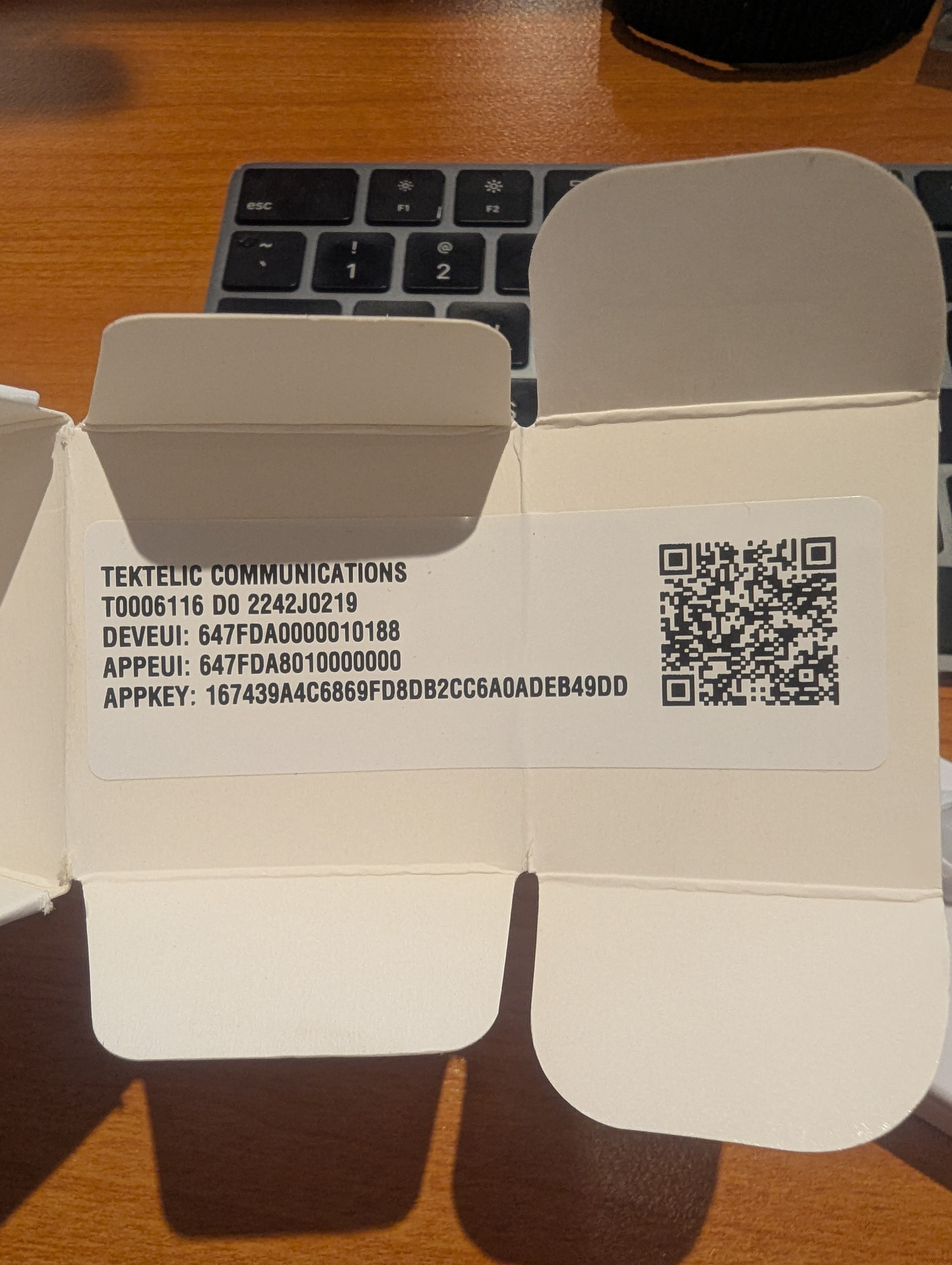
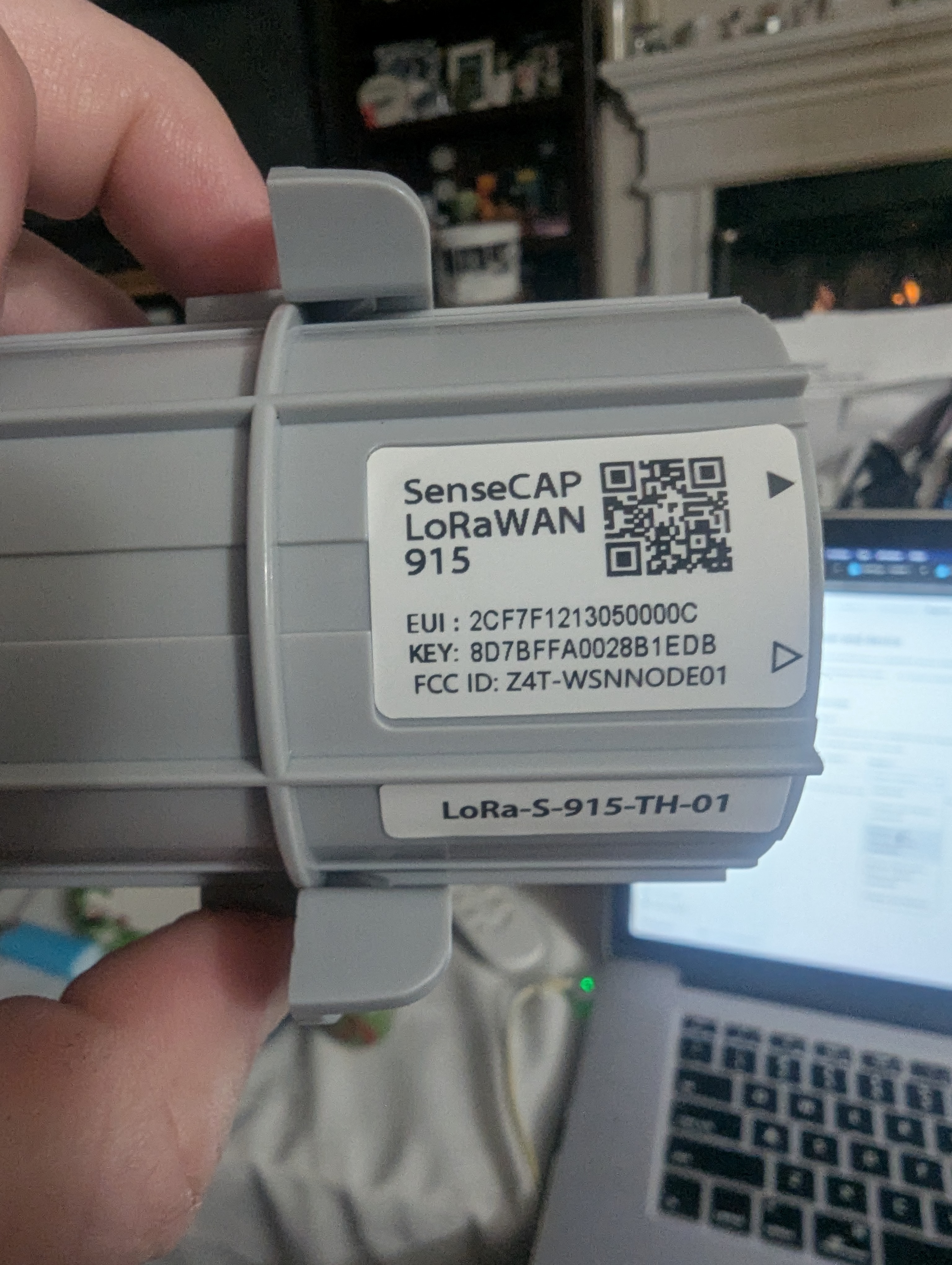
Commissioning 25 devices across a multi-vendor LoRaWAN deployment isn't a software problem — it's a logistics and process problem. Every device needs to be physically placed, documented, provisioned on the LNS, and verified in the dashboard. None of it is hard in isolation. At 25 devices across 6 zones it becomes an information management challenge.
Technical Spotlight
Closing the loop — literally.
Most IoT dashboards are read-only — sensors report state, humans react. The garage door integration was the first actuator in the system, proving the two-way LoRaWAN data path.
Reed sensor reads door state
A magnetic reed sensor on the garage door chain reads open/closed state. When the chain is taut (door closed), the circuit closes. This state is reported to TTN every uplink interval.
LT-22222-L wired to door switch
The Dragino LT-22222-L I/O Controller — a LoRaWAN relay module — was wired in parallel with the garage door button. It has 2 relay outputs and can receive Class C downlinks to trigger either relay.
Time-based rule in Datacake
A Datacake automation rule watches the clock and the door state sensor. If the door reports "open" after 6:00 PM, the rule fires a TTN downlink to the LT-22222-L to pulse the relay — same signal as pressing the button.
Geofence trigger via GPS tracker
Dragino TrackerD-LS units on company vehicles provided an additional trigger source. A vehicle entering the geofenced property perimeter could automatically open the door — no app, no remote needed.
Live Dashboard
Datacake — the one that won.
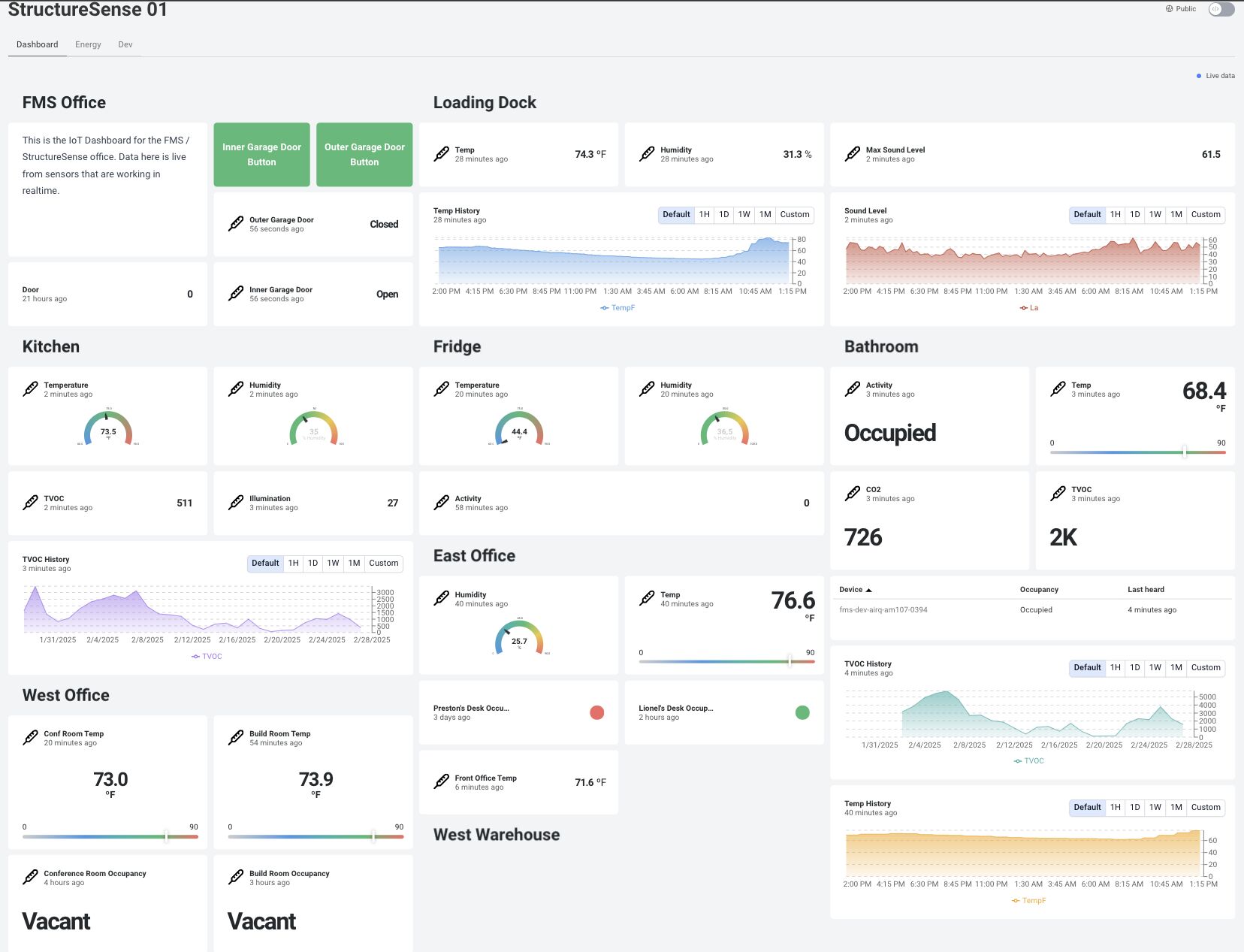
The Datacake dashboard aggregated all 25 devices into a single view, organized by zone. Live data, time-series charts, occupancy indicators, and remote door controls — all accessible from a browser, no app install required.
Installation
In the field.
Outcomes
What the POC answered.
TTN + Datacake is the stack
After testing 6 platforms, this combination had the right balance of reliability, device ecosystem, and dashboard flexibility for the property management market.
Commissioning needs a system
The device lifecycle spreadsheet — tracking DevEUI, zone, location photo, join status, and dashboard widget — became the operational backbone. At 25 devices it was essential. At 500 it would be critical.
LoRaWAN security holds up
AES-128 encryption both uplink and downlink, with unique per-device keys. The hardest security problem was key management at commissioning time — not transmission.
One gateway, 20k sq ft
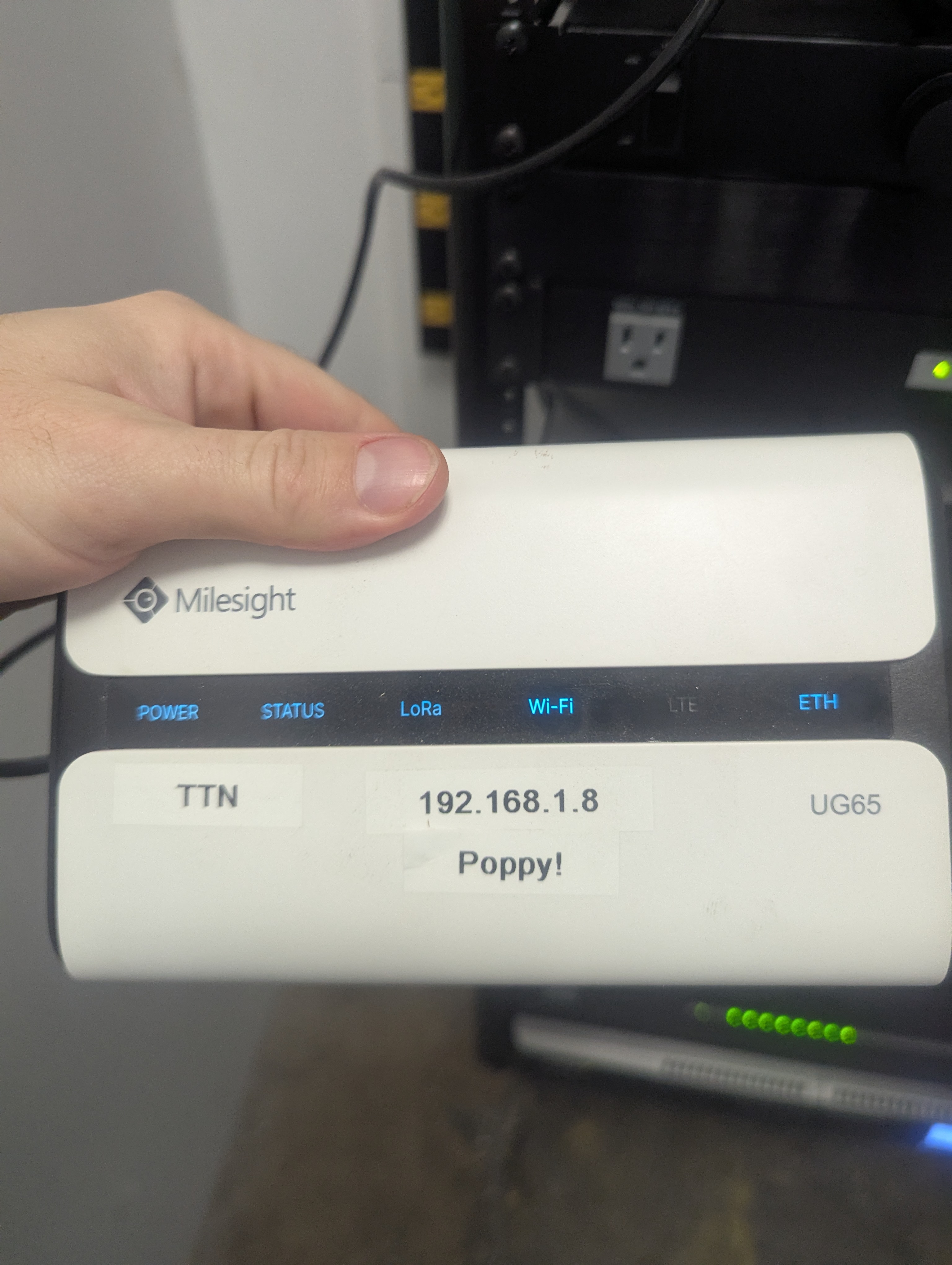
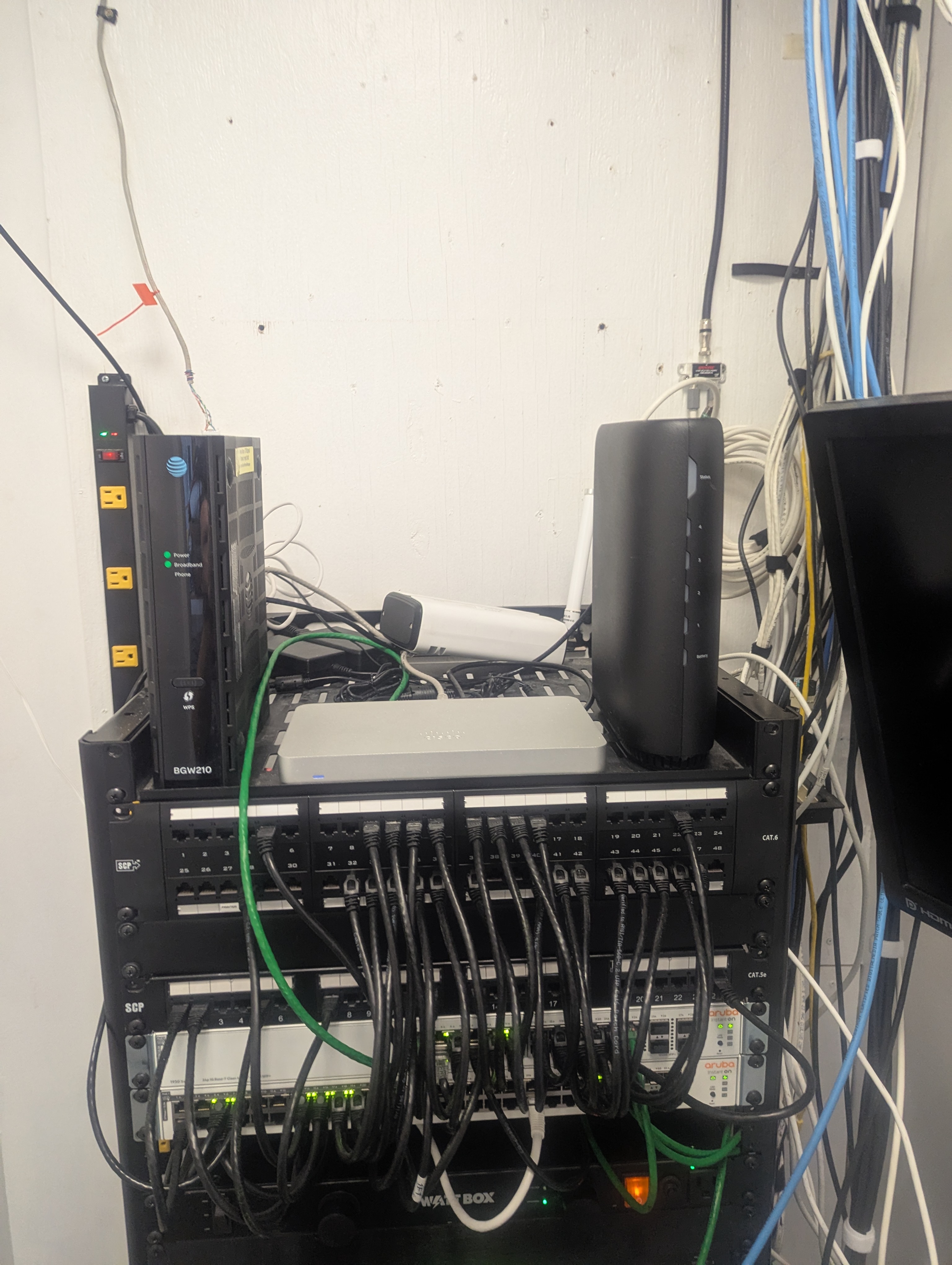
A single indoor Milesight UG65 covered the entire FMS deployment. LoRaWAN's range characteristics make it dramatically simpler to deploy than WiFi or Zigbee mesh networks at warehouse scale.
The prevention pitch is real
A fridge temperature alert, a leak sensor under a dripping HVAC unit, a dock door that closes itself — the ROI conversation with building managers writes itself once the dashboard is in front of them.
Foundation for StructureSense
The hardware knowledge, naming conventions, commissioning process, and platform decisions from this POC fed directly into the StructureSense platform architecture and the THPO custom sensor design.
Hardware & Software